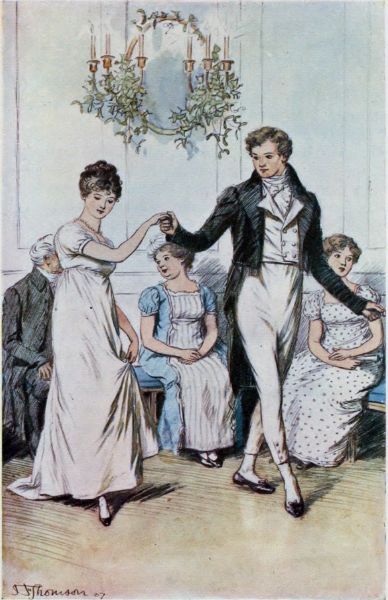
Showing posts with label Jane Austen. Show all posts

Saturday, June 1, 2019

The Ultimate Jane Austen Tag


Hello, all! I have made an amalgamation of tags from here, here and here. I thought about waiting to post this till the anniversary of Jane's death, but that seemed a bit of a morbid way to remember the day, and plus it's always a good time for Jane Austen. Today is perhaps better than some to publish this, for I am going to a Box Hill picnic.

I used to dislike tags because I couldn't come up with enough people to tag, since I follow so few active bloggers. Then I realized that filling out questionnaires is really fun. So this is really not a tag, per se, because I am not tagging anyone (except readers who may wish to answer the questions in the comments). Without further ado,


Which did you experience first, a Jane Austen book or a movie based on one? 
Technically neither. I first read a Great Illustrated Classics Pride and Prejudice, because I liked the cover. Then I read several of her novels before I saw any movie adaptions.

Have your Austen tastes changed over the years? 
Oh, for sure. I think I loved the abridged Pride and Prejudice from the first page. I liked the story so much that I attempted the actual text. It took me several weeks at least, but I made it through. Being only eight or nine, however, I thought it was unnecessarily wordy and a bit difficult to read. Somewhere around the third reading of Pride and Prejudice I changed my mind. :) 

On a scale of 1 to 10, how much of a Jane Austen fan do you consider yourself? 
10! At age thirteen I had read all of her novels. At age twenty, I've read all of her short stories, unfinished stories, poems, and letters. I love everything about her and her writing. I've been remember of the Jane Austen Society for three years. I've yet to read an official biography or visit her birthplace, but those are among my goals for the next several years.


What is your favorite Austen book and how many times have you read it?
Do not ask me to pick a favorite! I always say my favorite is whichever I have read last. I have probably read P&P the most (six times?), and all the others at least three times.

Which Austen book makes you laugh the most? (Or do you not laugh over any of them?)
Hm, probably Northanger Abbey or Pride and Prejudice. MP, P, and S&S are rather more serious. Emma is also very amusing at times, though.

Favorite heroine? Why do you like her best?
Elinor Dashwood. She is so strong, compassionate without being melodramatic, practical, and selfless. Anne Elliot is a close runner up, for the same reasons.


Least favorite heroine? 
Marianne Dashwood or Catherine Moreland. I like Marianne, but her drama can get on my nerves. Catherine Moreland, though humble and sweet, is so naive that I don't always see how Henry (spoiler, sorry) could be attracted to her.

Favorite hero? Why do you like him best? 
Duh, Mr. Knightley. I know Darcy's the most frequent choice and there's a solid Wentworth group, but I love Mr. Knightley. I like that he is quick to notice other people's feeling and reactions, is is kind but not a pushover, and makes decisions based on reality and not just emotions (not saying emotions aren't real... but sometimes you need to consider facts as well). He's also intellectual, without being snobbish, and a good conversationalist.
Henry Tilney is the next runner up. I didn't use to appreciate him quite as much, simply because I sort of forgot about him, through dent of not reading NA as much as some of the other novels. But he is so witty! And also very understanding, sensitive and sweet. I still choose Mr. Knightley over Henry, however, because I'm afraid he is too clever for me. I'd rather have a sensible conversation than have someone run 'round me with their witticisms.
I love the part when Mr. Knightley shuts down Mrs. Elton (quite politely, of course):
“No,”—he calmly replied,—“there is but one married woman in the world whom I can ever allow to invite what guests she pleases to Donwell, and that one is—”“—Mrs. Weston, I suppose,” interrupted Mrs. Elton, rather mortified.“No—Mrs. Knightley;—and till she is in being, I will manage such matters myself.”

Least favorite hero?
Edmund Bertram. I'm sorry to any Edmundites, but he is a weenie. For all his professed value of principles and morality, he is completely blindsided by a heartless woman because she is pretty and clever.

Who's your favourite Jane Austen 'villain'?
The Eltons. They are annoying but also amusing. The others are either completely despicable (like Wickham) or so realistically annoying that they are unbearable (like Mrs. Norris and Lucy Steele).

Who, in your opinion, is the funniest Jane Austen character?
Ooh, that's tough. Maybe Mrs. Jennings? Or Mrs. Bennet? Oh, wait, no, Mr. Palmer. With Mrs. Elton as a close runner-up.
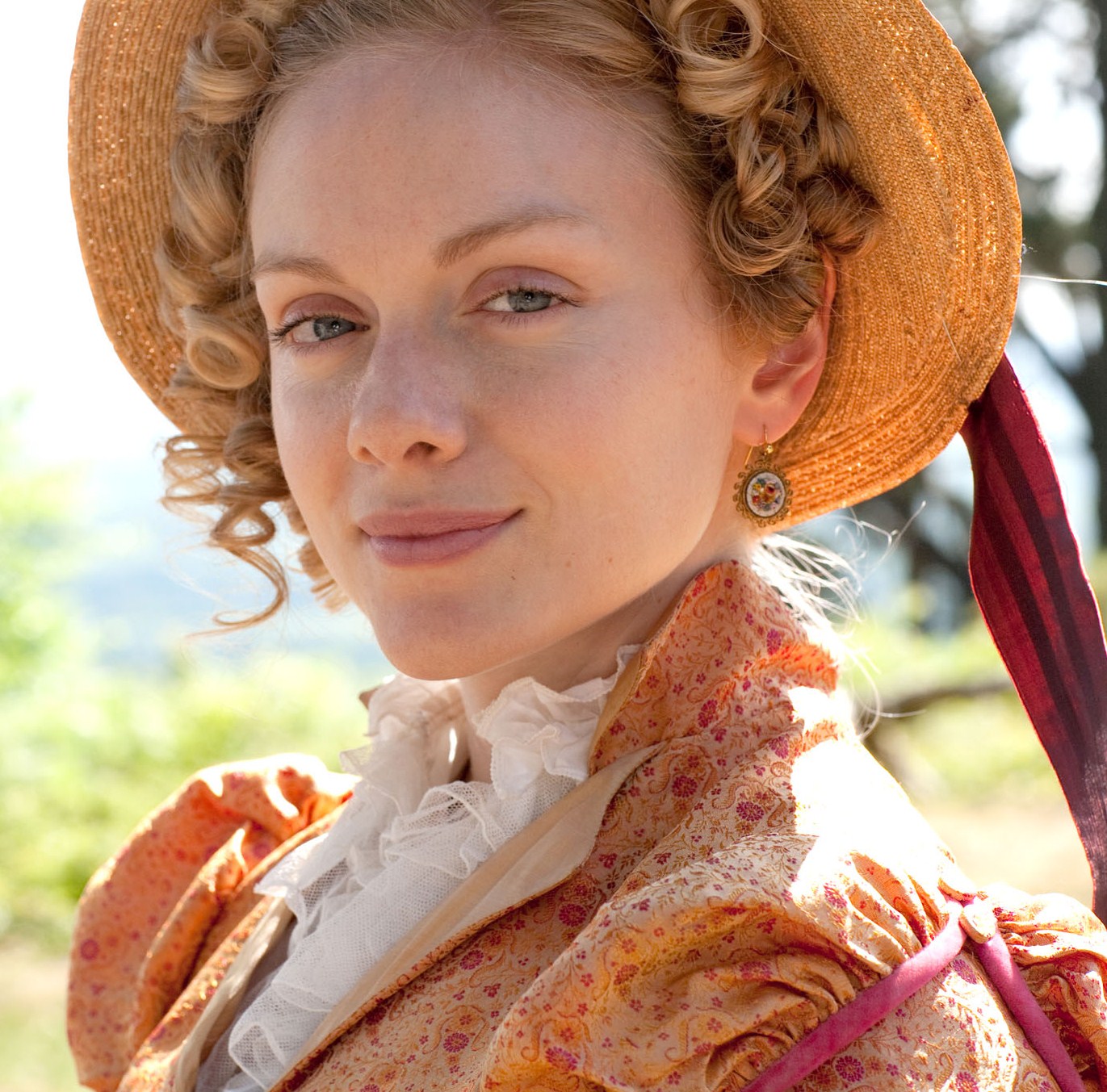

Which Jane Austen heroine do you relate the least to?
Probably Anne Elliot. While I value the opinion of authority figures in my life, I think I'm too headstrong to be persuaded against matrimony on purely a financial basis. I'm also not as long-suffering as she is.

Which Austen parents do you think do the best job of parenting?
If we're just dealing with the families of the main characters... There's not much to choose from. Can we count Mr. Darcy as kind of a parent to Georgianna? She turned out pretty well, which says a lot of him. Otherwise, pretty much all of the parents are lacking. The Morelands and the Dashwoods neglected to teach a daughter sense, the Bennets, Prices, and Woodhouses let their offspring run wild, the Elliots had all kinds of issues. In the end, though, Catherine's only issue is confusing fact and fiction. Her principles are sound and she has an affectionate, humble heart. So I'll go with the Morelands.

Who writes better letters, Mr Darcy or Captain Wentworth?
Trying to start a showdown here? I'm going to go with Captain Wentworth.
You pierce my soul. I am half agony, half hope... I have loved none but you... You do believe that there is true attachment and constancy among men. Believe it to be most fervent, most undeviating in F. W.

Do you have a favorite film adaptation of Austen's work?
I've really enjoyed all the Emma adaptions I've seen, particularly the 1996 (Paltrow) and 2009 versions. I also like Sense and Sensibility (1995) quite a bit.

What's your favourite Jane Austen dress (from one of the movies)?
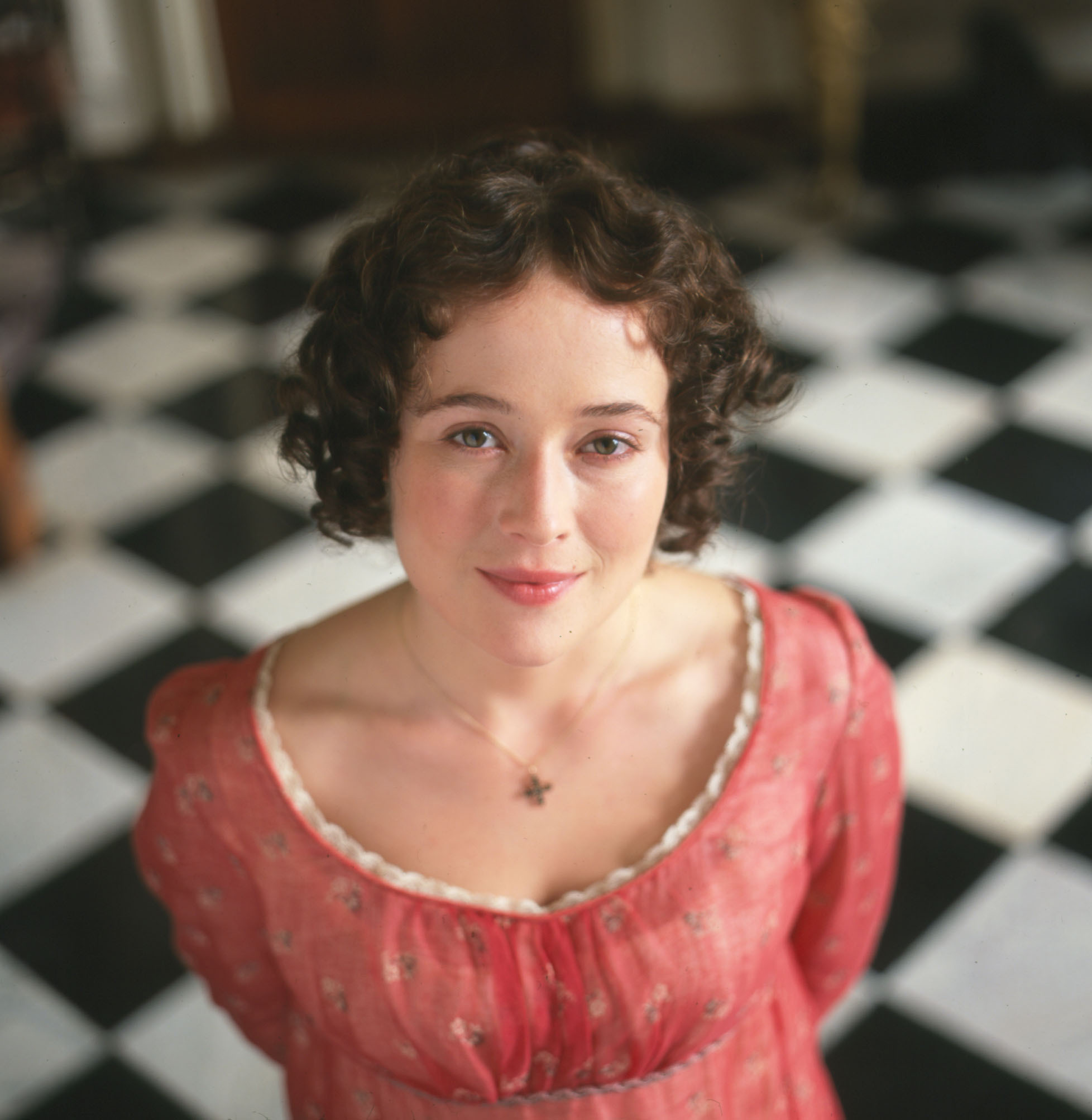
What, just one?? I like all three of these pink frocks:


If you could make a new movie version of any Austen book, which one would you adapt, and who would you cast?
Mansfield Park. We need a good adaption of this. I started the 1983 version but it was so downright boring that I didn't finish it. The two modern ones I have not seen, but in both I've heard they try to make Fanny Price into an Elizabeth Bennet. Unfortunately I'm not sure we'll ever get a good MP adaption because Fanny Price isn't the sort of heroine to be liked by a modern audience. Though Jane Austen declared that Emma was a heroine that no one would like but herself, I think Emma's independent, can-do character is more appealing to The Liberated Woman than quiet, moral Fanny Price. Friends, not everyone is Elizabeth Bennet and not everyone should be or has to be. Fanny is just as strong as Emma, even if she's not as commanding. She's also very patient, humble, and a victim of unrequited love.
Soapbox aside, actually coming up with a cast list is tricky because I don't know that many actors.
Morfydd Clark or Claire Foy as Fanny Price.


Michelle Dockery as Mary Crawford.


For Mr. Crawford: Maybe Tom Hiddleston or Mathew Goode?


It's hard to think of an actor who can be as moral and weak as Edmund Bertram. Maybe Dan Stevens?


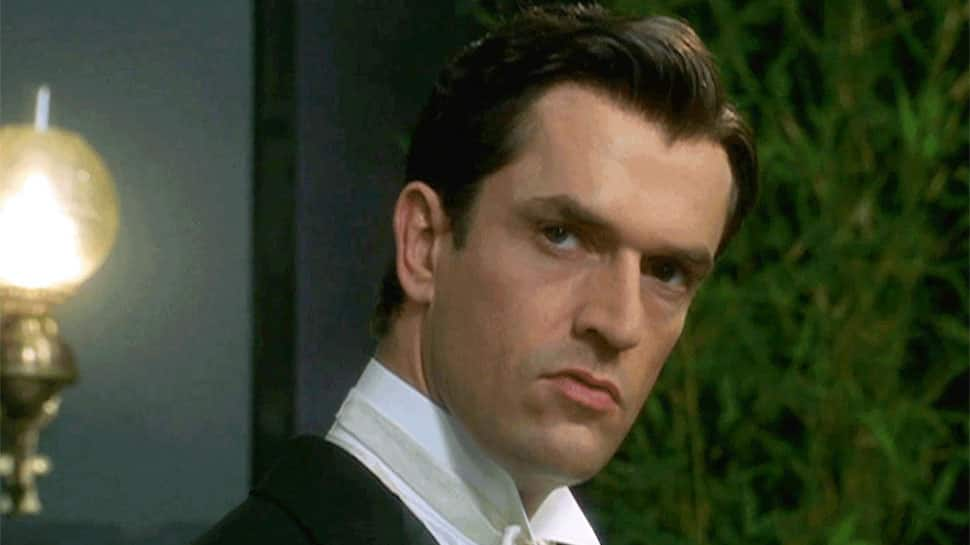
Rupert Everett as Tom Bertram? Assuming he was about 15 years younger. ;)

Honestly I feel like just about anyone could play Sir Thomas — perhaps Hugh Bonneville, he has plenty of experience with stuffy old noblemen. :) I think Judy Parfitt would be excellent as Lady Bertram, except that she's a bit old. Pam Ferris could be a good Mrs. Norris.


Who would you most like to play in a Jane Austen movie?
Honestly, I would love to play any character in a Jane Austen movie, because even the most minor characters are loads of fun. I think Emma might be the most fun heroine to act.

Do you quote Jane Austen randomly in public?
Yes, I do, even though most people don't get the reference.

Is there any felicity in the world superior to a walk?
No, indeed, unless it's sitting on a deck on a misty day with a cup of tea and a friend. Or lying in the grass reading a good book.


What is your reaction when you hear that an acquaintance (e.g. A lady at church) of yours loves Jane Austen? 
I instantly feel that we are kindred spirits, and if I judged her/him (especially if it's a him) as not friend-material in the past, I resolve on making further efforts to get to know him/her.

Do you have any cool Austen-themed things (mugs, t-shirts, etc)? 
Why yes I do. I have a Jane Austen mug that's covered in quotes, some JA stationery, way more copies of each book than is reasonable, and I have her silhouette framed on my wall. (I did win an "I Love Mr. Darcy" shirt a few months ago, but it was too large and not really my style anyway).

Do you know any English country dances? 
Yes! I have been dancing for six years and actually teach ECD on occasion.

If you could ask Jane Austen one question, what would you ask her?
I think I would ask her about her faith. We know Jane was a pious woman and very traditional (she disapproved of the new Methodists) but there's not a lot else recorded about her religious beliefs. I know a lot of people want to know what was in the letters Cassandra burned and think there was some hidden love story, but I personally don't believe there's anything in that. Like any woman, there were men Jane was attracted to and may have had a little dalliance with, but I don't think anything went beyond that. Except with Mr. Bigg-Wither, which was clearly a Charlotte Lucas situation.

Share up to five favorite Jane Austen quotations! 

Hm, I shared almost all my favorite quotes already above or in this post. 
"If I loved you less, I might be able to talk about it more. But you know what I am. — You hear nothing but truth from me.— I have blamed you, and lectured you, and you have borne it as no other woman in England would have borne it." (Mr. Knightley, Emma)
"I have been used to consider poetry as the food of love," said Darcy. "Of a fine, stout, healthy love it may. Everything nourishes what is strong already. But if it be only a slight, thin sort of inclination, I am convinced that one good sonnet will starve it entirely away." (Pride and Prejudice)
"I cannot speak well enough to be unintelligible." (Northanger Abbey)
Her family had of late been exceedingly fluctuating. For many years of her life she had had two sons; but the crime and annihilation of Edward a few weeks ago, had robbed her of one; the similar annihilation of Robert had left her for a fortnight without any; and now, by the resuscitation of Edward, she had one again. (Sense and Sensibility)
"Those who do not complain are never pitied." (Mrs. Bennet, Pride and Prejudice) 
As far as walking, talking, and contriving reached, she was thoroughly benevolent, and nobody knew better how to dictate liberality to others; but her love of money was equal to her love of directing, and she knew quite as well how to save her own as to spend that of her friends. (Mansfield Park)
My dear Alicia, of what a mistake were you guilty in marrying a man of his age! just old enough to be formal, ungovernable, and to have the gout; too old to be agreeable, too young to die. (Lady Susan)
I give you joy of our new nephew, and hope if he ever comes to be hanged, it will not be till we are too old to care about it. (Letter to Cassandra)

Oops, it said only five. So much for struggling to find that many. :)
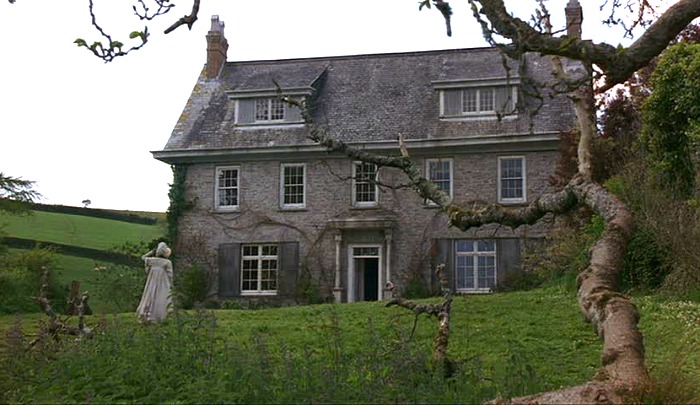


Where would you live in Austen's works?
For my own part, I am excessively fond of a cottage; there is always so much comfort, so much elegance about them. If people do but know how to set about it, every comfort may be as well enjoyed in a cottage as in the most spacious dwelling. Thus, Barton Cottage is the most appealing to me, despite being a defective sort (but the shutters could be repainted, you know).

And that concludes today's monstrously long tag. Look for an Austen "Would you rather" in the future.


P.S. I've decided that, as a true Janeite, I must watch all of the film adaptions ever made of a Jane Austen novel (the ones in English, that is, and which don't have Objectionable Content). So far I've seen:

  • Pride and Prejudice (1940)
  • Pride and Prejudice (1995 - duh)
  • Pride and Prejudice (2005)
  • Pride and Prejudice (2003) - Set in modern-day Utah
  • Sense and Sensibility (1995)
  • Sense and Sensibility (2008)
  • Scents and Sensibility (2011)
  • From Prada to Nada (2011)
  • Emma (1972)
  • Emma (1996) - with Gwyneth Paltrow
  • Emma (1996) - TV movie
  • Emma (2007)
  • Mansfield Park (1983) - I got very bored and could not finish.
  • Persuasion (1995)
  • Northanger Abbey (2007) - Did not finish because it started going in Awkward Directions
  • Love and Friendship (2016) - actually Lady Susan
  • Austen fan films: Miss Austen Regrets and Austenland - I started Lost in Austen but honestly it was so bad I couldn't finish.

On the to-watch list:
  • Mansfield Park - 1983 miniseries, 1999 movie and 2007 miniseries. I've heard that all of these botch the story and Fanny's character but I figure a true Janeite does not depend on the representations of others. (I mean they sound pretty terrible but why not).
  • Pride and Prejudice (1980)
  • Sense and Sensibility (1981)
  • Northanger Abbey 2007 and 1987
  • Bride and Prejudice
  • Becoming Jane - I KNOW it will be terrible (as Miss Austen Regrets was) but I feel I ought to see it for myself.
  • Austen Country (a documentary)

Any I forgot?

Thursday, April 4, 2019

Such a Sister, Such a Friend

"I have lost a treasure, such a Sister, such a friend as never can have been surpassed,—She was the sun of my life, the gilder of every pleasure, the soother of every sorrow, I had not a thought concealed from her, & and it as if I had lost a part of myself."

-Cassandra Elizabeth Austen, writing to her niece Fanny after Jane's death


In case you didn't know, college life can be very busy. Currently I'm waiting for a pot of water to boil (and thus bound to the kitchen but forbidden to stand by the stove, since, as you well know, a watched pot never boils), so I have a stolen minute to write this.


No matter how busy I am, though, I like to read a little before bed to put my brain to sleep. I rarely read more than a few pages a night, so I go through my bedtime books fairly slowly. I started Jane Austen's Letters, edited by Deirdre LeFaye, on October 10 and finished at the end of March. This isn't truly indicative of my speed in reading, however, as of course there were some nights I read something else. These nights increased as I neared the end of the book; I like to finish things but I did not want to be done with Jane.

(The water has now come to a boil, but I must remain to watch it and be sure my eggshells do not boil over. Yes, eggshells. I am making homemade calcium powder to make tooth paste.)

It would be grossly unjust to pretend I know Jane Austen the way Cassandra did. However, in at last finishing this volume, knowing I have now read every word the dear creature wrote (which remains to us, anyway), I cannot but feel in some small way that I've lost a friend. For months I read a letter before bed nearly every night, feeling comforted after the stress of the day that still Jane was there, with her good sense, frank humour, lively wit, and deep affection for her family. 

Her kindly notes to her young nieces were delightful. She wrote that she was "quite tired of so many children" and recommended "the simple regimen of separate rooms," yet she doted on her many nieces and nephews. She wrote to Fanny and Anna as though they were sisters and treated her younger nieces, such as Caroline, as though they were adults. And imagine getting literary criticism from Jane Austen! As an Aunt myself, two passages stuck out to me:


"Now that you are become an Aunt, you are a person of some consequence & must excite great Interest whatever You do. I have always maintained the importance of Aunts as much as possible, & I am sure of your doing the same now."
(Letter to Caroline Austen)

"His having been in love with the aunt gives Cecilia an additional interest with him. I like the idea,—a very proper compliment to an aunt! I rather imagine indeed that nieces are seldom chosen but out of compliment to some[284] aunt or another. "
(Letter to Anna Austen Lefroy, regarding Anna's novel)

I laughed out loud many times and frequently identified with her concerns. As she lamented that her handwriting was never as small or as neat as she could wish, or that too-perfect heroines made her feel "sick and wicked," I wanted to tell her, "Me too!" 

I love Regency clothing, the manners, and the old British idioms. I'm drawn to Jane Austen's novels and other writings for all those reasons, but also because of the "me too" feeling one gets while reading. No, I don't spend my days taking country walks, writing letters and changing for dinner. But it is absolutely delightful to read a 19th century novel and to encounter the same human emotions, desires, idiosyncrasies, and disappointments as those found in 2019. Two hundred years removed, I feel more of a kinship with this woman than with any of my classmates. 

Friday, October 5, 2018

"My idea of good company is... clever, well-informed people, who have a great deal of conversation"


"You are mistaken," said he gently, "that is not good company; that is the best."
- Chapter 16 of Persuasion, by Jane Austen

Ahhh.... One week ago today I departed from my house to go to the Jane Austen Society's Annual General Meeting. Readers, it was completely delightful. (Minus the parts where I locked my keys in the car, got kissed on the forehead by a complete stranger, and lost the pictures of my ball attire. But those were negligible.)

During the day, probably 10-20% of the ladies* were dressed in some form of Regency garb. Even though this put me in the minority, as it was completely acceptable to be wearing a full-length gown, I felt elegant rather than uncomfortable. It was especially fun, when outside the hotel conference rooms and wandering around buying food, to see women in gowns and spencers (with normal shoppers carefully not looking at them). I loved seeing all the variety in colors, fabrics, hats, turbans, and hair styles. Everyone looked so lovely.

The bandeau kept wanting to slip off my head, but a few pins did the trick.

I attended the three large lectures as well as four small seminars. One large lecture concerned the economy in 1814-1816. We learned about the economic crash that followed the Battle of Waterloo, during which Jane wrote Persuasion, as well as the financial failures of Jane's banking brothers. I found all of this quite interesting as it was all new information for me. The speaker also explained why Mr. Elliot *spoiler* refrains from assisting Mrs. Smith. As a lawyer and executer of her will, he was actually receiving a retainer's fee. Additionally, he owed Mr. Smith money. So if he were to settle her property, he would lose a source of income and have to repay his debts. *end spoiler*

Another of the large lectures was on "Self-delusion in Persuasion," given by a very witty British professor ("We all know the purpose of an umbrella, of course — to hold over a lady."). He pointed out that the word "self-delusion" is only used in Persuasion, but that all of Jane's novels deal with the topic. Persuasion has the least dialogue percentage of all six novels; rather, the book is full of listening and internalising. Even the narration of events is usually Anne's supposition rather than an objective narrator, and we cannot accept that Anne is unbiased. For instance, when Jane Austen writes, "Anne understood: ..." we should read "Anne persuaded herself that..." (Such as when Anne tells herself she is happy to know without doubt that Captain Wentworth no longer cares for her, as she will no longer have to wonder. Snort.)

My favourite seminar was called "Louisa Musgrove and Captain Benwick: Shipwreck or Love Boat?" The speaker started by playing a Persuasion trailer, made with the Love Boat theme (it's fun to be with adults vs. college students because we share more cultural references, haha). She presented opposing views on whether or not Louisa and Benwick would make a successful match. Have they truly grown alike? Or is Louisa only beginning to recover (and will soon realize that her liveliness is unsuited to him) and Benwick an "emotional parasite" who will attach himself to anyone willing to listen to him? 

The end of the seminar was spent in discussion. I have always been skeptical of their match, though not against second attachments in general. Though Jane might censure the speed in which he forgot Fanny Harville, she clearly would not have advocated for the kind of emotional wallowing to which Benwick (and Marianne Dashwood) is prone. In time, it is more healthy to move on from a loss than to hold onto it forever. Additionally, one attendee made a point which completely changed my view on Louisa and Benwick: though their love seems completely circumstantial, a great portion of the novel is about circumstances happening in a particular way. Even about Anne and Captain Wentworth it is said that, "Half the sum of attraction, on either side, might have been enough, for he had nothing to do, and she had hardly anybody to love." Described this way, the two couples are actually not that different.

I basically never take selfies so when I do I end up looking uncomfortable/mad.**
Of course the conversation was excellent. There was a spectrum of familiarity with Jane and the Regency era, from twenty-year Janeites to those who had only been recently introduced. I suppose I was a little intimidated by attending the AGM and was expecting everyone would be highbrow scholars who sewed their own [100% period accurate] clothing, so it was nice to realize there weren't any high expectations and it was just fun. 

It was delightful to be able to take up with a stranger and find he or she was a kindred spirit, and not have to explain references to books, quotes, etc. Or when in the lectures the speaker would reference another classic, like Dickens, and everybody nodded and laughed at the right places. Or telling someone I'm a charwoman for an office and not having to define that occupation. I don't like that this analogy sounds like I'm a pathetic friendless soul, but I would say I it was like living all your life in a foreign country and then finding a place where they speak your language. (This is no reflection on people who do not enjoy or read Dickens, Austen, etc. 19th c. reading may not be for everyone, but I adore it, and I've never been in company with people who agree.)

The Emporium was great fun and I consider myself to have been very self-disciplined to have only bought one $4 book that was on my list anyway, a pack of stationery (I'm always going through that), and taken a business card from another shop. (I also bought a little thing of Welsh cakes, but that was because I'd forgotten to bring a snack, so it doesn't really count. Shush.) Though that was all I bought, I found myself coming back between every session to roam among the books — and there, entered into multiple conversations, including an exchange with a girl originally from Kansas City, whose parents [I realized] I have danced with at multiple dances but never met. In a group of nine hundred people it was quite a coincidence. In addition to many books by and about Jane Austen, one could purchase British food, Regency attire, antique jewelry, tea towels from Jane Austen's House Museum, even a Japanese translation of Pride and Prejudice.


The period concert opera was gorgeous. I was really tired and sort of wanted to sleep towards the end, but then a lady started singing Italian opera and it was absolutely beautiful.

And of course, the ball and banquet were the highlight of the weekend —  I've never in so large a company of dancers, let alone a group that is 90% costumed and competent dancers. I sat with my chapter for the banquet, so I got to meet more members whom I've never seen before.


All in all, it was a delightful weekend, and I think Anne Elliot would agree we were in very good company.

Well, readers, would you attend the AGM? Do you think Louisa and Benwick will be a happy couple? 


Your Servant,


*I refer only to "ladies" because of the 900 people attending the conference, the majority of course were women over 40 (one of the men's rooms was re-labeled "women's" in intelligent anticipation of this ratio!). There were younger ladies and some gentlemen, however.
** Also decided there's no real reason not to post face-revealing pictures on this blog. So there you go.

Sunday, September 16, 2018

A very exciting news article

(No, I'm not engaged. Sadly.)

My posts per year have decreased from an average of 35 to 17 to 6. When I do post, it's an isolated tag or random, unasked-for movie review. When I address my "readers" I wonder if they're actually in the plural. More and more this internet spot reminds me of the many blogs whose authors regularly post over 4-5 years, slowly slacken off, promise to be more consistent, and then never post again.

I recently saw another blogger post "I'm going on hiatus for the summer." This rather made me laugh. Not at the lady, you understand, but because I'm either always on hiatus or never on hiatus. The sentimental side of me finds it sad that I don't really keep up this blog anymore, but the cynical side of me just thinks it's silly to think of "updating my readers" since my audience is basically non-existent.


But I refrain from deleting it for two reasons: 1) It is a time capsule. I'm no longer the same young girl who created this blog, but, well, I was then, and I may want to visit and remember those days.

2) I sometimes have news, ideas, or creative endeavors that I must share, and since I don't participate in social media, this is my outlet. I like putting my thoughts into words and recording milestones in my life, so I'm not going to "officially stop" blogging. Nor am I going to apologize for doing so infrequently, because that's just how life is. Although I'm didn't take summer classes, I worked about 30 hours a week at a preschool (if I haven't mentioned it, I dote upon kidlets, though while I'm in certain classrooms I never think of tame and quiet children with any abhorrence). Now I'm back to being a full-time student, so when I'm not at work, in class, or doing homework, I'm taking much needed breaks with friends, family, or the Lord.


And this is one of those cases where I simply must share some news. GUYS I'M GOING TO THE AGM NEXT WEEK AND I CAN'T CONTAIN MYSELF.

Sorry, didn't mean to shout. I shall begin again. The Jane Austen Society of North America (hereafter referred to as "JASNA"), of which I am a member, is having its annual conference (known as the Annual General Meeting, or AGM) in a city close to mine. And I'm GOING. In twelve days, I shall be mingling with kindred spirits, learning about the economic background in Persuasion, examining Captain Benwick and Louisa Musgrove's relationship, and dancing the night away at the closing banquet. Plus wearing Regency attire for 48 hours.

At the moment, I'm in the middle of writing a semi-fictional paper on cultural change in the Rashidun period. But I had to take a quick break to share the the countdown to two days spent with Janeites. So now back to the Arabs.
Image and video hosting by TinyPic

Monday, July 2, 2018

The Relative Merits of Pride and Prejudice films

There seems to be a continuing debate on the superiority of one Pride and Prejudice film (1995 or 2005) over the other. Despite the vocal majority being on the side of Colin Firth P&P '95, it is a not a truth universally acknowledged. Additionally, the debate sets up a false dichotomy, since of course these are not the only films to attempt to portray Jane Austen's classic.
Because I had way too much time on my hands am not entirely satisfied with either movie, I recently watched the 1940 Pride and Prejudice also presented here for your interest. It will henceforth be referred to as "Southern Belle P&P."

*Note: This is not a "review." I'll be dropping spoilers like... well, frequently, and I provide no synopsis. It is intended to be a guide to Janeites who have read the book but have yet to see any (or some) of the adaptations.*


CHARACTERS

1940 // 1995 // 2005
ELIZABETH BENNET

Southern Belle P&P: As an actress, I actually think Greer Garson may be the best Lizzy. Her character is written a little more teary-eyed than Elizabeth Bennet of the books; at times the Old Hollywood style of acting (tending to the melodramatic) is a little too much. However, she plays Lizzy's overall outlook of "choosing to be amused at the world" well, so I think if she had been directed by the 1995 or 2005 director she could have been the ideal Lizzy.

Colin-Firth-in-a-wet-shirt P&P: I do like Jennifer Ehle as Lizzy, but she isn't the ideal Lizzy for me. She is a good actress, and has a good handle on the character, as well as being the most Lizzy-looking of the three. I think it might be her voice (sorry, I know she can't help it) which just doesn't shout "Elizabeth Bennet" to me.

Emo P&P: It's hard to put my finger on what drives me crazy about Kiera Knightley's portrayal. Perhaps she's a little too emotional? Brooding? Yes, she says funny things and laughs, but instead of an overall amused outlook on life it seems to be an overall brooding outlook, which she forces herself to break by making a joke. Also, she doesn't behave with dignity. Perhaps that is the main flaw with her acting. Or perhaps it's just hard to get past all the eyeliner and sloppy hair (complete with pixie cut sticking out in the back).

1940 // 1995 // 2005
MR. DARCY
 1940: It is difficult to say how much is due to Laurence Olivier's acting and how much is due to the writer/director of his character, but Darcy is much too likeable in this movie. His first line "Tolerable, but not enough to tempt me" was his first and last moment of rudeness. From then on, he and Lizzy have amicable conversations and he is all kindness. Except for the first proposal. They kept the lines pretty much straight from the film, but it felt all wrong, because this Mr. Darcy is so nice. It rather came out of nowhere. He even says, halfway through the film, "I rather admired what you did this afternoon, Miss Elizabeth. Your resentment of what you believed to be an injustice showed courage and loyalty. I could wish that I might possess a friend who would defend me as ably as Mr. Wickham was defended today." ??
They spent so much time making Darcy seem like a great hero, the writers forgot that Darcy is NOT a friendly, perfect guy in the opening scene. He is proud (see the title) and because of that, rude at times. There isn't a secret romantic passion between him and Elizabeth from page one. She only takes interest in him some time after his first proposal, and for a reason.

1995: Not my ideal Darcy (sorry!), but it's hard to say why not. He's the best I've yet seen. I'm only now just getting past the the Darcy hype and learning why, 10 years ago, I fell in love with this romance and this hero. I haven't much to say about Mr. Firth because he plays Mr. Darcy pretty well.

2005: Matthew MacFadyen's Darcy does a much better job showing his pride than Laurence Olivier, but it also tends to the "he's just socially awkward and shy, it's all a misunderstanding" view of Darcy. My dear readers, Darcy's change is central to the story. Also, his hair wants cutting.
1940 // 1995 // 2005
JANE
1940: Jane is totally ditzy in this film. I mean, ridiculously. I'm unable to find any youtube clips of her  illness at Netherfield, but the way she nods and smiles in a nothing-going-on-upstairs kind of way in that bit kills me. She says a few sweet things, is definitely pretty, but appears to be an idiot. Clattering by Lizzy and Darcy talking: "Mr. Bingley is going to have dancing!"

1995: Susanna Harker is a lovely person, but the hair styles in this movie are just not becoming to her. I also feel that she comes across as not particularly intelligent. Of course, this depends on how you like your Jane. Mr. Bennet says that all of his daughters are "silly and ignorant like other girls." He is deliberately antagonizing Mrs. Bennet at this part, but I think his comment is valid. Kitty and Lydia are obviously officer-silly. Mary's moralizing speeches show a lack of true understanding. Jane's insistence on thinking well of people becomes almost willful ignorance. Even Lizzy, who has "something more of quickness than her sisters," is totally mistaken in the true character of our leading gentleman and his enemy. So, if you take the position that Jane ought to be a little dim witted, you would certainly have a case to argue, and I will not complain against Susanna Harker.

2005: Rosamund Pike does such an excellent job of showing Jane's sweet, gentle personality. Her smiles at Mr. Bingley seem genuine, yet Charlotte's advice that Jane had better show more affection than she feels does not seem unwarranted (contrastingly, the 1940 Jane is so vivacious that Mr. Darcy's plea of being unsure of Jane's feelings seems ridiculous). Her tears and "Yes, a thousand times yes!" in response to Mr. Bingley's proposal (oops, did you know they end up together?) is perfectly Jane. I personally prefer Jane kind but not dumb — not that she is ignorant of people's evil intentions, but chooses to hope for the best in them.

Mary, 1940 // Kitty and Lydia, 1995 // Mary and Lydia, 2005
THE SILLY SISTERS
1940: All the girls act TOO silly: Jane, Lizzy, and Mary included. Mary wears glasses and visits a book shop, but isn't otherwise bookish or solemn. Not one moralizing speech makes an appearance. Kitty and Lydia (of whom good pictures are few) are not memorable. Lydia's big scene, when she returns a married woman, is so hastily done that the irony and shamelessness of the moment is entirely lost.

1995: Mary is great. Her serious reflections are just what they ought. She does look a little old for the part, though. Lydia sounds perpetually hoarse but Julia Sawalha is a great actress. Her flirtations and improprieties drive me horribly crazy, as I'm rather a stuffed shirt than otherwise. I'm not a huge fan of Kitty.

2005: Kitty and Lydia are decent, but the girls are simply not that funny. The film tones them all down. Mary's only memorable speech is a line stolen from Miss Bingley about having conversation instead of dancing at balls, delivered half heartedly.

1940 // 1995 // 2005
MR. AND MRS. BENNET

1940: Over the top funny. They, too, suffer from the melodramatic vein of Southern Belle P&P, but they're not bad.

1995: Mrs. Bennet is perfectly awful. Her scheming and gossiping and fancying herself ill drives one absolutely batty (as it ought). Her voice sounds like Miss Piggy (I'm sorry, you'll never be able to un-hear that). Mr. Bennet is delightfully sarcastic. "Well, my dear, if Jane should die of this fever, it will be comfort to feel that it was all in pursuit of Mr. Bingley, and under your orders."

2005: Mr. Bennet and Mrs. Bennet are decent. I've heard it said that Mrs. Bennet is a little too sympathetic as a character. And yes, there are moments, when she and Mr. Bennet are quietly talking over their daughters, that you don't hate her. But Alison Steadman is an excellent actress and her "Such flutterings and spasms all over me!" quickly replaced by "A daughter, married!" is absolutely hilarious.
Mr. Bennet slouches horribly and I have always found it annoying.


MR. COLLINS

1940: He's not bad, but comes across as just totally ditzy, like he's wandering around in a cloud world (come to think of it, everyone in this film seems a bit farther on the ditzy-scale than normal). He isn't as pompous and self-important as one expects.

1995: Every bit of this Mr. Collins is oily, including his hair. He is perhaps a little too much a times, but he is very funny. I will say that the book describes Mr. Collins as tall, and David Bamber is short. This does add to the humour, however.

2005: Mr. Collins is once again, humoursly short. He is very funny, but quite different from the 1995 actor. It really depends on how you like your Collins; Tom Hollander is less oily and seems more sincerely full of his self-importance (David Bamber's pomposity [is that a word?] seems more put on). It is extremely difficult for me to pick between the two, as they are both represent the character well but in different ways.

1940 // 1995 // 2005
WICKHAM
Wickham is a tricky character. He can't seem too good, because of course he is wicked at heart. But if he is obviously a creeper to a person watching the movie with no knowledge of the book, it makes Lizzy seem stupid to have believed in him.

1940: This Wickham is, in a way, the best of the Wickhams, because he doesn't seem like a slimeball at all. He is quite dashing (with his totally-Regency moustache) and seems like a nice enough fellow. He keeps seeming like a nice fellow all the way to the end, in fact, by which time we ought to remember he's not.

1995: Wickham is good, very friendly and gallant, but I will say that he seems like a faker to me from the beginning.

2005: Mr. Wickham suffers from the 2005 hair problems and his modesty is a bit overdone. But I will say he is my pick of the Wickhams, because he manages to be not creepy in the first bit, while still being believably evil in the second half.

1940 // 1995 // 2005
LADY CATHERINE

1940: Edna May Oliver acts Lady Catherine fairly well. She has a I confess this Lady Catherine leaves something to be desired, but it is more the character than the actress I quarrel with. The writers added a plot twist that Lady Catherine is actually a sweet old lady who just has an attitude. ?

1995: Ah, Lady Catherine. Swelled with dignity, yet not polite. She says out loud what everyone else is thinking. Barbara Leigh-Hunt is an excellent actress, but at times seems a little languid, as if she is ill.

2005: It is impossible to complain about Judi Dench. She plays the Imperious Grand Woman to perfection. She is even less apologetic about herself and her opinions than the 1995 Lady Catherine. "How very strange!" "Fitzwilliam, I need you!"


Clockwise from top left: Miss Bingley and Mrs. Hurst, 1995 // Bingley, 1995 // Miss Bingley, 2005 // Bingley, 2005
THE BINGLEYS

1940 (Of which there are no great pictures): Miss Bingley is very imperious and haughty. Nothing to complain about. Honestly, Mr. Bingley is just boring.

1995: Miss Bingley is a very good actress. She gives the Bennets a charming welcome which would certainly deceive Jane, while glancing behind her with a "when will this be over" look that isn't lost on watchers. "Mr. Bennet! Mrs. Bennet! Quite delighted. Ah, and all your daughters..."This is the only film where we get a Mrs. Hurst. Charles Bingley is charming.

2005: Some people think this Mr. Bingley seems dumb. I do not think he is any dumber than Jane Austen intended him to be (see reflections on Jane Bennet, above). She says only that he is "by no means deficient" and that Darcy is "the superior" in understanding. I think this Mr. Bingley is adorable. It's hard to get past the fact that Miss Bingley is almost always in a state of undress, but her cutting lines are well delivered. She is, if anything, a little too nasty. We don't really see her being charming.


*Of course, I haven't dealt with Georgianna, Col. Fitzwilliam, the Gardiners or Charlotte Lucas... Since brevity is the soul of wit, however, suffice it to say that Georgianna is omitted from the 1940 version and seems to be all of twelve years old in the 2005 version. Col. Fitzwilliam is strange in Emo P&P, and wears a kilt in Southern Belle P&P. In Southern Belle P&P, the Gardners are omitted and Charlotte Lucas is barely a character. They are decently portrayed in both the 1995 and 2005 versions.

STORYLINE:

1940: Though I've read the book at least half a dozen times, seen the 1995 version thrice and the 2005 version twice that, I didn't know what was going on in Southern Belle P&P. It is right at two hours long, and they manage those 120 minutes very ill. The events of the book are very compressed, in order to fit in some random scenes which seemed peculiarly unnecessary. For instance, at the first ball, Lizzy meets Mr. Darcy, Mr. Bingley meets Jane, Lizzy is snubbed by Darcy, barely five minutes later is asked to dance by him, AND Wickham and Darcy encounter each other.

Instead of the Netherfield ball, there is a garden party, at which Lizzy hides in a clump of bushes from Mr. Collins (waving conspiratorially at Darcy so he won't give her away and then thanking him for complying), Darcy demonstrates how to hold a bow very closely to Lizzy (who then demonstrates to him that she is an excellent archer), and all of Lizzy's family embarrasses themselves. Miss Bingley then compliments Lizzy on her interesting family, after which she cries in the garden and Mr. Darcy comforts her. And we get this beautiful exchange:
"At this moment, it's difficult to believe that you're so... proud."
Quoth he: "At this moment, it's difficult to believe that you're so... prejudiced. Shall we not call it quits and start again?"
They don't of course, because he still hasn't explained about Mr. Wickham, injured Jane, or proposed, and if they got engaged now we would have no story.

Both proposals are strange. Because she seems to have a secret passion for Mr. Darcy from day one, Lizzy almost accepts the first proposal (which wouldn't have been too unnatural, as it is hardly rude at all), and is almost laughing afterwards, rather than needing many days for composure. Then the Wickham event, which Lizzy hears of after returning home. Rather than going immediately to help Wickham, he asks if he can help and then does nothing, since she says no. Instead we have an unnecessary scene where Miss Bingley tells Darcy and Bingley that Wickham and Lydia are still missing. This has caused the Bennet family to be completely ostracized in their community and she even reports that Lizzy and Jane have been seen fleeing through the streets. It is only THEN that Darcy decides to go look for the pair, after which he sets them up with a yearly salary, enough for Lydia and Wickham to arrive at Longbourne in a four-horse carriage and trumpeters before them (!).
Upon their visit, the viewers learn that the Bennet's are actually moving to a seaside town to escape the shame. Everything is in an uproar, with tea cups on the floor and a parrot in a chair, when Lady Catherine arrives. Her visit is actually a stunt to test Lizzy's loyalty, as Darcy is waiting outside. When Lizzy refuses to not marry Darcy, Lady C. sails out and tells Darcy that Lizzy is "perfect" for him, since he's been spoiled all his life (not evident in this film, for he is kind and considerate and not at all proud or selfish). "What you need is a woman who can stand up to you."
The ending sequence shows Lizzy in the garden with Darcy, Jane and Bingley reconciling in another nook, Lydia together with Wickham, and Mr. and Mrs. Bennet surveying two young men paying attentions to Mary and Kitty in their parlor. (They know it's love because the young rector is playing the flute to Mary's terrible singing with great complaisance.)

So yes, we have five sisters in need of marriage, two proposals, a visit to Rosings Park, and a scheming Miss Bingley, but otherwise the story is quite different. There is no visit to Pemberley, nor is one necessary, since Mr. Darcy is already quite endearing and Elizabeth quite endeared.


1995: It's hard to complain about this movie. It's pretty accurate to the book; though it's hardly fair to compare this to the other two, because it's 5 hours long, and has a lot more time to include all the details of the story (for instance, including Mrs. Hurst as a character. I like it when movies get all the details right, but I don't quarrel with this kind of omission because I realize time constraints make it necessary to do so.)
My one grievance with Andrew Davies is the notorious wet-shirt scene. You know what I'm talking about. Colin Firth strips down to his [albeit modest] underclothes, and it is in this wet shirt (no waistcoat or frock coat, which would have been quite inappropriate to be without) that he greets Elizabeth. Is it unreasonable that a guy would swim in his own pond after a hot ride, and that visitors should arrive concurrently? No. Is it something Jane Austen would write? A resounding no.

Various small bits differ from the book, but unlike certain other adaptions, the additions are things that Jane Austen might have written herself (except for Lydia running into Mr. Collins in the hallway half clothed. That is Lydia behaviour though, so I let it slide).


2005: Though not as deviant as Southern Belle P&P, Emo P&P takes some liberties.
Though I like Bingley, I dislike the fact that he chats with Jane in the bedroom when she's sick at Netherfield (this actually happens in the 1940 version as well, though he has the decency to peer over a screen, I guess). *I* wouldn't let a non-relative male into my bedroom while I'm lying there in my pjs. You think they were less concerned with propriety two hundred years ago?
The first proposal takes place in the rain (so Kiera can have extra runny eyeliner) and almost becomes romantic. ?! It's not supposed to be romantic. They aren't supposed to almost kiss at the end. He is RUDE, readers, and she is offended. (But um, still maintains dignity, Lizzy. You don't run about yelling "For once in your life, leave me alone!" at people).
Instead of meeting her on a walk, Mr. Darcy comes into Elizabeth's bedroom (where's she been sitting in her pjs, staring into a mirror all day), without even knocking, to drop off his letter.
The director must have a thing with filming people in their pajamas, because Lady Catherine's visit to intimidate/interrogate Elizabeth takes place in the middle of the night. I really have no clue why this decision was made.
We shouldn't be surprised then, when a fourth scene, namely the second proposal, also takes place in pjs. Heaven and earth, are the shades of Pemberley to be thus polluted? Serendipitously, Mr. Darcy and Lizzy both wander out about 5 am or so to take a walk in an adjoining field. With the inspiring words "Well.. your hands are cold" their romance is finally on happy footing.
A brief consultation in pjs with Mr. Bennet (probably agrees to the marriage because her reputation has been compromised) seals the deal, and then the scene switches to the married pair, wearing... you guessed it, pjs once again. A lot of kissing, and then the end.


One incorrect aspect of the film in general is that the Bennets are portrayed as very poor. The director expressed a desire to show how life was "pretty dirty" back in the day. He said that "messy is beautiful. I think tidiness is ugly and so that's just my aesthetic." This certainly comes across. Mrs. Bennet is slovenly, nobody's hair is tidy, and a pig wanders through the house. Although, yes, Mr. Bennet owned a farm, and yes, in their context the Bennets were "poor," they were not barely surviving peasants. Longbourne is not the name of the Bennets house, but a small village that Mr. Bennet owns. They have servants. The animals would have been some distance from the house. Perhaps the nineteenth century wasn't pristine, but neither are the Bennet ladies farm girls.
Overall, they do a fine job of compressing the plot into just over two hours. However, the expression of the film seems modernized, and, unfortunately, sensationalized. Readers, Jane Austen's original has enough emotional highs and lows without needing everyone in their pjs. (Note: Jane and Bingley's romance is handled much nicer than the main protagonists'. I dote upon them and their proposal scene is adorable.)

COSTUMES
1940: Sleeves as big as your head, eyelashes as long as your little finger, ridiculous bonnets, huge hoop skirts. I think the filmmakers envisioned the time period as the 1830s, while channeling Gone with the Wind.  Lady Catherine's outfits (see above) were reminiscent of an 1890s ensemble.
There were a few pretty frocks, such as Lizzy's First Proposal Dress.

Lovely Greer Garson almost always has large back curls and roses in her hair.

This one is simply strange.


But mostly it is just too much.

It's a balloon! It's a basketball! It's a... sleeve.

1995: I would not claim to be a fashion expert, as I base most of my knowledge off of google searches and being observant, rather than primary research or even reading books on the subject. However, to my limited knowledge and according to the statements of those who do know, this movie has the most period accurate (c. 1815) costumes. One of the only exceptions I know of is that the ladies frequently display décolletage in morning gowns, which would only have been appropriate for evening wear (odd, I know, but our society allows bikinis at the beach and not at the grocery store, so...) Also, the fashion of wearing white at a wedding only arose after Queen Victoria's marriage (1840). I don't blame the film makers too much for this, since people expect white at a wedding now.

As the film is five hours long, the costumes are far too numerous to be adequately covered in an already full post. I shall simply share the highlights.
Lizzy's gowns are probably my favourite. She and other Bennet girls frequently wear white, as would have been common.


She has some lovely spencer jackets (As compared to Kitty and Lydia's, which seem ill fitting and not that pretty. See above.)


Notice the lovely orange spencer and her hem detail. Ignore the fact that Mr. Darcy is in dishabille.
I also love Charlotte's lavender blue ball gown.

Lizzy's hair!

I quite adore Mr. Darcy's green frock coat with his pinstriped waistcoat.


2005: The number one goal of this film was to be pretty, not accurate. I have read that the costume designers found the empire waist ugly, so they decided to set the movie in the 1790s (when the first draft of Pride and Prejudice was written), rather than 1813 (when it was rewritten and published). However, they still weren't going for accuracy, so we have a clash of Regency, Georgian, and just plain modern things in this film.
Most characters, including Elizabeth, have a good deal of natural-waist dresses. She has some particularly strange pieces, like this weird, 1990s-looking jumper.


This is also one of the many examples of her hair hanging loose. This would have been considered quite inappropriate in either 1795 or 1813... (Also notice the eyeliner, which will make many more appearances on Miss Lizzy.)


Even when the waist line is higher, the silhouette is still wrong, as featured on Lizzy and Charlotte here. I do like Lizzy's green dress, as the color suits her very well. 


If you will notice, the waist line in a true Regency dress is very high and defined. It is possible that the designer was trying to make the dress more flattering to Kiera in particular, for Jane's clothing seems to be a little more accurate (this could also be a reflection that Mrs. Bennet gives her favored daughter nicer clothing?).


Lizzy also wears this horrible coat, which looks like it should belong to a man (not a man from the Regency era, though...)


This one is better. The brown and blue look nice together.


What is up with this weird little jacket? At least her hair is up, the hussy.

Jane has some very pretty pieces, all more Regency-looking, my favourite of which is this coat:


Both Jane and Lizzy look quite nice at the ball, I will say. I love the pearls in Lizzy's hair.

Miss Bingley's clothing is generally more Regency (except her hair). Perhaps the film makers intended for her to be more fashionable?


Except when she wears a slip to a ball... twice.


Lady Catherine de Bourgh, Mrs. Bennet, and the three young Bennet girls are squarely Georgian the whole movie. I think the idea here was that Mrs. Bennet and Lady Catherine, as older women, are still wearing the older fashions, and the girls are too young to have fashionable clothing? This may make sense for Mrs. Bennet, but I quarrel with it in Lady Catherine, as Austen actually goes to the trouble to remark (via Mr. Collins) on her "elegance of dress."

Very pretty, as are many of Mrs. Bennet's ensembles, but not Regency.
The men's clothing is decent (but doesn't compare to Colin Firth's waistcoats), and their hair is awful!

Mary, Kitty and Lizzy in Georgian peasant costume, Jane pretty in a blue Regency gown.

Mr. Bennet looks like he should be playing one of the Founding Fathers.

The tuft in the back spared her the concern she might have felt in refusing him, had his hair been trimmed in a more gentlemanlike manner.

"Why do only men with mullets take an interest in me?"

BONUS: THE DREAM TEAM

So, the question that I've dodged around this whole post: Which is the ideal P&P? The answer is: none of them. Not one of them completely satisfies my notion of the perfect movie. It's hard to do it really well in only 2 hours, but I'd also like a P&P adaption which I don't have to devote an entire weekend to. And I'll be honest, the cinematography of the 2005 is more visually appealing to me than the 1995 (partly because of the simple fact that it was made 10 years later with newer equipment &c.). So if I, in an ideal universe, could produce a Pride and Predjudice adaption...
I would have Andrew Davies adapt his script (1995) to three hours. Roman Osin (2005) would direct the photography.
Dario Marianelli would adapt his soundtrack to the new film. (The 2005 soundtrack is almost my favourite thing about the whole movie. I've nothing against the others but they're nothing to write home about, in my opinion.)
Green Garson and Colin Firth would star as Elizabeth and Darcy. Mr. and Mrs. Bennet (just barely beating the 2005 couple), Lydia and Mary, Georgianna, and the Bingley sisters would be played by their 1995 actors. Jane, Mr. Bingley, Lady Catherine, Wickham (with a haircut, a smidge better than his 1995 counterpart), Kitty, and Mr. Collins would be from the 2005 film.

Agree? Disagree? Colin Firth or your money back? McFadyen for life? I'd love to hear your thoughts!

Image and video hosting by TinyPic

P.S. Read this far and still want the simple answer? My favourite adaption, and the most faithful, is the 1995 film. 2005 is a great romantic movie that I still enjoy, but if you're a die-hard purist, it will drive you bonkers. Then again, if you don't have 5 hours and period accurate costumes aren't important to you, go for the Kiera Knightley version. Only watch Southern Belle P&P if you have two hours to kill and nothing better to do with your life.